SDCC EXCLUSIVE: Cinematographer Guillermo Navarro Talks 20 Years of ‘Pan’s Labyrinth’
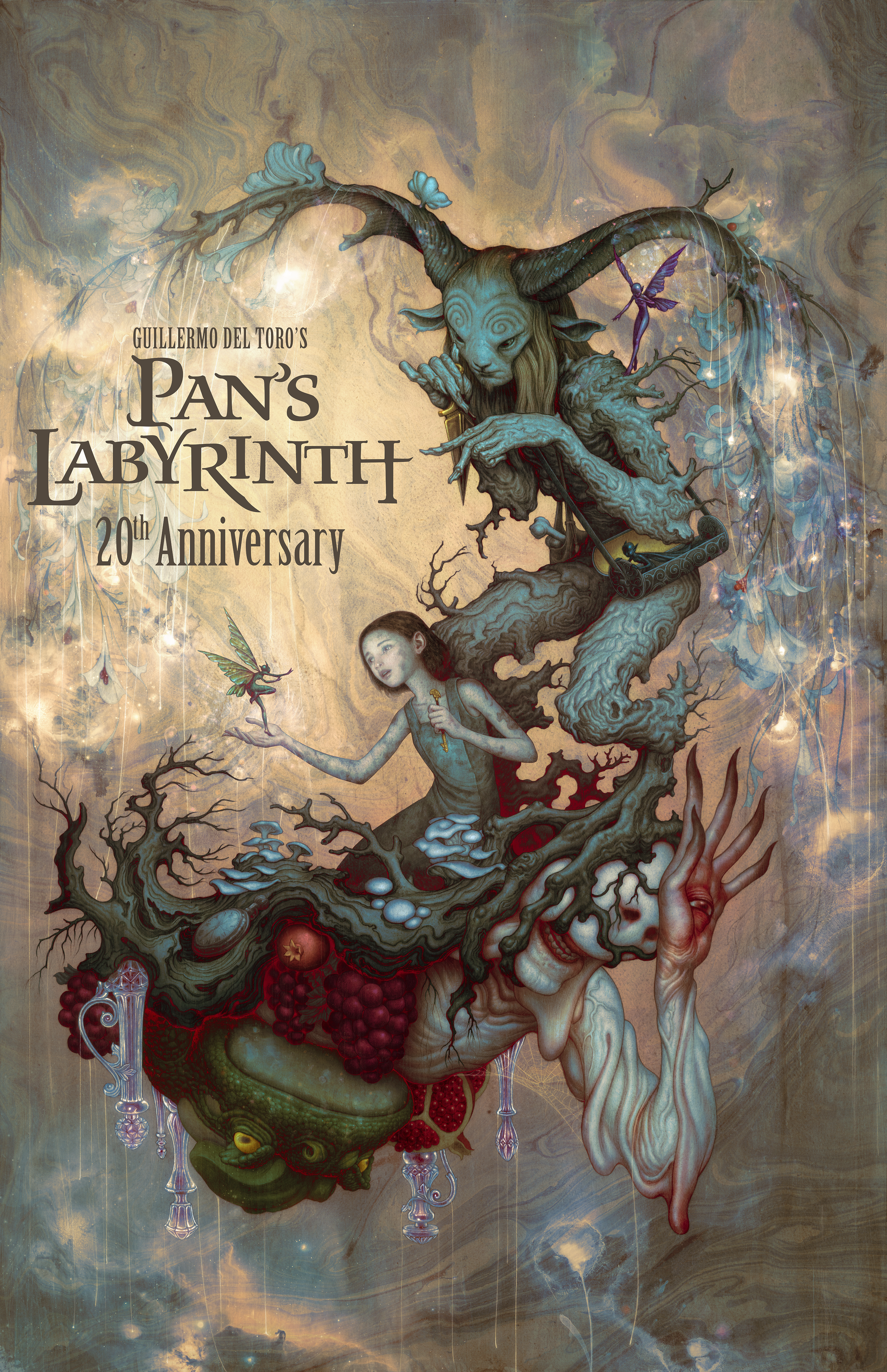
Prior to its Hall H panel, cinematographer Guillermo Navarro sat down with BB and other members of the press to chat the 20th anniversary of Pan’s Labyrinth. During the chat, Navarro talked what it was like when Guillermo del Toro brought the film to him for the first time, if it could be filmed now, and so much more.
What do you remember about Guillermo del Toro first bringing you Pan’s Labyrinth?
“We had already made The Devil’s Backbone, and there’s no Pan’s Labyrinth without The Devil’s Backbone. We had already started exploring that chapter of Spain’s history—not just the political story, but the human story. The Devil’s Backbone didn’t have the same parallel reality elements, but it laid the groundwork. With Pan’s Labyrinth, the challenge became figuring out how to push those ideas further. We had to find a way to help the audience navigate these parallel realities while keeping the real world grounded in the brutality of fascism, the resistance fighters, and the human relationships within the military quarters. Those dynamics were incredibly important.
On paper, it was actually a very complicated movie. We kept asking ourselves, ‘How do we convey this? How do we have this little girl chasing a fairy without it becoming ridiculous?’ It could have easily gone in the wrong direction. So we created imagery that encouraged viewers to accept a different set of storytelling rules. Right from the beginning, when Ofelia steps out of the car, follows the insect, and begins that journey, we’re already asking the audience to embrace this new reality. Little by little, we taught viewers how to navigate between the fantasy world and the real world without making those transitions overly obvious.
By the middle of the film, audiences instinctively know when they’re in one world or the other. The visuals were instrumental in achieving that. We found a kind of color coding that subtly guided the audience, helping them understand where they were without calling attention to it. When Ofelia first descends underground and encounters the Faun, you’re still in a real place—the stairs exist—but suddenly the Faun is there. You discover, through her eyes, that this isn’t simply imagination. Other worlds exist, each with their own rules, and they coexist alongside reality.”
The Pale Man sequence has such an eerie, magical atmosphere. How did you approach filming that scene?
“I actually did the opposite of what a traditional horror movie would do. Most horror films would make that scene dark and shadowy. Instead, we created this incredible feast of color. The banquet is beautiful. The grapes look delicious. Everything is inviting because you’re experiencing it through Ofelia’s eyes. She’s simply exploring this extraordinary place, so we wanted the audience to experience that same sense of wonder before the danger reveals itself. It’s really the opposite approach from what another filmmaker might have chosen.
We also echoed visual elements from the Pale Man later with the Captain. When he’s standing before the fire receiving terrible news, he’s framed in much the same way—consumed by his own reality. Those visual parallels were intentional. Everything had meaning. The hourglass wasn’t just a prop. It represented the limited amount of time Ofelia had. The sand keeps falling, she lingers too long, and eventually the Pale Man awakens. Every detail served the story.”
Although the film contains monsters and frightening moments, it doesn’t feel like a conventional horror movie. Was that intentional?
“Absolutely. We wanted to avoid the predictable horror movie aesthetic—the kind where you know exactly when the scare is coming. The film certainly has horror elements. There are monsters, there’s evil. But no one is more frightening than the Captain, and that’s a very real kind of evil. Everything was built around staying in the shoes of the young girl. The audience experiences the world the way she experiences it. That perspective shaped every creative decision we made.”
Looking back, what were some of the greatest technical challenges in making the film?
“The challenges often came from the realities of the production. We had very little money to make the movie. One of the biggest challenges involved the night scenes. There are many nighttime sequences, but we only had the resources to shoot a limited number of actual night exteriors. Much of what appears to be nighttime in the forest—walking along the river, approaching the camp—is actually day-for-night photography. Normally that’s something cinematographers try to avoid because audiences can usually tell. But we managed to make it work. It’s one of the things I’m still proud of.
Another major challenge came during the attack on the camp. Spain was experiencing widespread wildfires that summer, so we weren’t allowed to use any explosives. Since we couldn’t create real explosions, I relied entirely on lighting. We borrowed large theatrical lights, added heavy dimmers and colored gels, and created the illusion of explosions through carefully timed lighting effects. Watching it now, audiences completely believe they’re seeing explosions, even though we felt a little ridiculous creating them that way.
Another particularly tricky sequence involved the Captain shaving and stitching his face in front of the mirror. Those scenes were filmed during the first two days of production, even though they had to match material we wouldn’t shoot until seven weeks later. Coordinating all of those prosthetics, reflections, and continuity from the very beginning of production was incredibly challenging.”
The film was shot on 35mm. Would you approach it differently today with digital technology?
“I’m grateful we shot the film on 35mm. I honestly don’t think Pan’s Labyrinth would be the same movie if it had been made digitally. Film gives the image a texture—you almost feel like you can touch it. That tactile quality is such an important part of the movie’s atmosphere, and I don’t think digital could have recreated it in quite the same way.”
Cineverse’s will re-release Pan’s Labyrinth in honor of the film’s 20th anniversary on Octoner 9, with new 3D and 4K conversions.
*This interview has been edited for length and clarity.