REVIEW: Christopher Nolan Charts a Bold New Course with ‘The Odyssey’
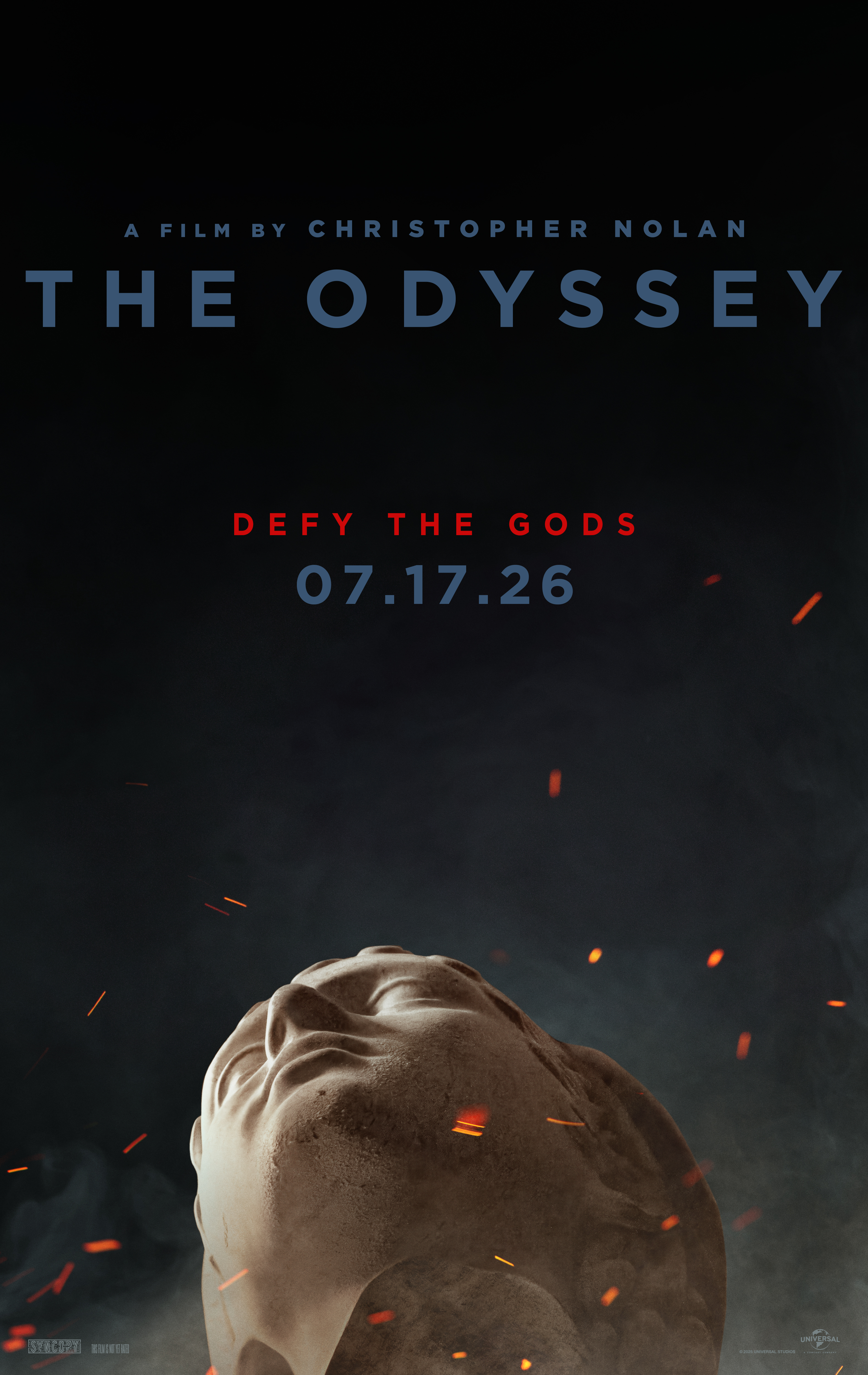
In his first film since Oppenheimer, director Christopher Nolan returns to the summer box office with what may be his greatest achievement yet: The Odyssey. Based on Homer’s epic poem, the story follows Odysseus (Matt Damon), the King of Ithaca and a legendary leader. When Agamemnon calls upon him to help conquer Troy during the Trojan War, Odysseus leaves behind his devoted wife, Penelope (Anne Hathaway), and his young son, Telemachus, uncertain if he will ever return home.
After ten years of war with no victory in sight, Odysseus devises the now-famous Trojan Horse strategy to infiltrate the city of Troy. The plan succeeds, and he and his men celebrate their hard-fought victory by pillaging the city. Ready to return home at last, Odysseus believes the worst is behind him. Instead, the gods have other plans. What should have been a simple voyage becomes a decade-long journey that tests his courage, resolve, and humanity in every possible way.
The Odyssey is one of the most well-known stories ever told, and some viewers may take issue with the liberties Nolan takes in adapting the source material. In true Nolan fashion, he isn’t content telling just one story. His version of The Odyssey is simultaneously a war epic, a tale of self-discovery, a political drama, and a supernatural adventure. Nolan trims many of the original’s mythological elements and even redistributes certain storylines among different characters. While that may sound chaotic on paper, it unfolds beautifully on screen.
Nolan structures the film through seamless transitions between memory and the present, allowing audiences to piece together Odysseus’ journey. Through his perspective, we learn how he became stranded on the island of Ogygia with Calypso (Charlize Theron) before ultimately returning to an Ithaca that is far different from the one he left twenty years earlier.
Written by Nolan, the film excels visually but occasionally stumbles in its dialogue. For a film approaching three hours, there are moments when additional dialogue could have helped flesh out certain plot points and character motivations. Even so, the runtime flies by thanks to Nolan’s breathtaking visual storytelling. His reliance on practical filmmaking over excessive CGI gives every battle and action sequence an authenticity that is becoming increasingly rare. Combined with meticulously detailed sets and costumes, the world of The Odyssey feels fully immersive from beginning to end. These creative choices make the film essential viewing on the biggest screen possible.
Like many of Nolan’s previous films, The Odyssey is elevated by an exceptional score. Reuniting with composer Ludwig Göransson proves to be another winning collaboration. Göransson’s music often accomplishes what the dialogue cannot, driving the narrative forward in some moments while allowing emotional beats to resonate in others. The score reaches its peak during the film’s final twenty minutes, where every element comes together. Damon’s performance, Göransson’s soaring music, and Nolan’s spectacular action combine to deliver a finale well worth the journey.
As Odysseus, Matt Damon carries the film with remarkable confidence. It ranks among the strongest performances of his career and could very well earn him another Academy Award nomination. Every decision Odysseus makes reflects his unwavering determination, allowing audiences to understand why so many men followed him into battle and remained loyal to him.
Anne Hathaway delivers a graceful and emotionally rich performance as Penelope. She portrays the queen with both strength and vulnerability, and one particular scene shared with Tom Holland is certain to generate Oscar buzz.
Holland shines as the adult Telemachus, bringing youthful determination and quiet vulnerability to a character searching for his own identity. While his role could have benefited from more dialogue—particularly during scenes with Jon Bernthal’s Menelaus and Lupita Nyong’o’s Helen—he makes the most of every moment he’s given.
Robert Pattinson and Corey Hawkins are wonderfully detestable as Antinous and Polybus, two arrogant suitors competing for Penelope’s hand. Every scene they appear in leaves you hoping justice will eventually catch up with them. Zendaya (Athena), Charlize Theron (Calypso), Samantha Morton (Circe), and John Leguizamo (Eumaeus) round out the impressive supporting cast. Although their roles are smaller, each actor leaves a lasting impression and elevates the story in meaningful ways.
The Odyssey is an epic worthy of epic filmmaking, and Nolan rises to the occasion. Fans of Homer’s original work may not embrace every creative decision, but this is unmistakably Nolan’s interpretation—a bold, ambitious reimagining that feels both classic and modern. While the dialogue occasionally falls short of the film’s lofty aspirations, everything else serves as a reminder of why audiences still flock to theaters. Nolan has used his blockbuster budget to craft a cinematic experience that demands to be seen on the biggest screen possible.
If you’re considering waiting until it arrives on streaming, don’t. The Odyssey deserves to be experienced in a theater—preferably in 70mm or IMAX.
Grade: A