EXCLUSIVE: Michael B. Jordan Chats Bringing Creed III to Life
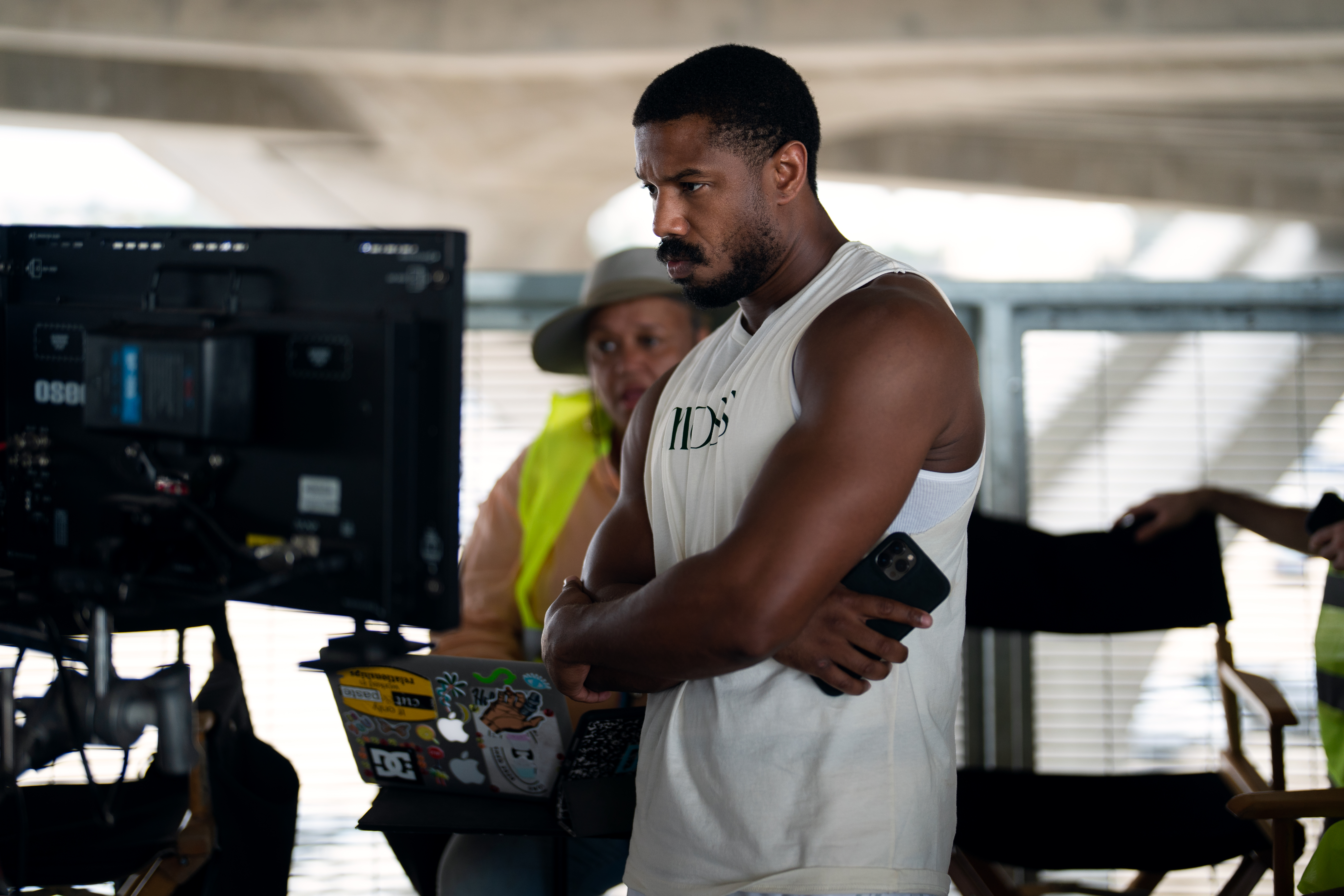
Creed III is now in theaters and to celebrate we got the chance to hear from from the star, and director, of the movie, Michael B. Jordan. Jordan makes his directorial debut and chatted about making the movie, working with friend and executive producer, Ryan Coogler, Los Angeles, and so much more. Check out what he had to say below.
How were you approached to direct the movie? Did Ryan Coogler come to you and ask or did it come about in a different way?
“To be clear, it was never a moment like that. But he definitely had a lot to do with it. He told me that I could direct. There was a moment where I was in awe of what he was doing. Seeing a Black man my age, somebody I knew well, or getting to know at that time, command a set. In Fruitvale Station you know what was possible.”
What made you finally want to do it?
“I think for me, him telling me, ‘Mike, you can do this too,’ was when that first seed got planted in my head of, like, okay, maybe I could direct one day. I didn’t know what it was gonna be. I didn’t know what movie I was gonna step behind the camera on. But as, you know, we did Creed, and Creed II came along. Steven [Caple Jr.] jumped into the director’s chair and had that experience. And as we grew, the third one just seemed like it was the perfect time for me to step behind the camera”.
Did you chat with any other directors as you prepared to make this movie?
“Ryan definitely was one of them. It was like, all right, cool, this is like the perfect opportunity to step behind the camera. I think preparing to shoot this movie, Ryan had a lot of thoughts. He was a great sounding board for me. So was Jon Favreau and Bradley Cooper and Denzel Washington. Those are some people that I tapped into to get their opinions. I really talk to actor-directors.”
You weren’t just a director on this movie, though, you were also a star. Can you tell us what that was like balancing the two?
“That that was gonna be a big challenge for me being behind the camera and in front of the camera simultaneously. So those people [Favreau, Cooper, & Washington] have had success at doing it. Sometimes their first project being that as well. So that really helped inform me on what to expect, even though there was nothing that anybody could really tell me to prepare me for what the journey was gonna be like. It was one of those things you just have to, you got to live it and get through it. And the hardest thing I’ve had to do so far. But at the same time, I felt the most alive doing it, so it was rewarding.”
Will we see more directing in your future?
“I think so. I can say that. Yeah, for sure.”
Can you tell us a little bit of how important it was for you to be able to bring all these visuals to the story and create your own flavor with the visuals in the movie?
“First time directing you’re in your head thinking about what’s your style gonna be? You overthink yourself going into it. Trying to create your own visual language. And say, ‘I’m following Ryan and Steven. Oh, man, I got to do this. I got to do that.’ I think there’s a little bit of that that you spend in your head a little bit. And I think something that you start to realize is that it’s just showing up and being honest every day. Then slowly your style will start to shape itself. I can’t even tell you what it is right now. But now that the movie is done and finished with, I think that is a representation of just my truth.”
How does it feel to see all your hard work come to life?
“There’s some scenes, the shots in the movie that I’ve, like, dreamt about. Literally, I’ve dreamt about. I’ve imagined, daydreamed in my head, and when you see it on screen, I’m like, ‘Oh, man,” like, that’s the type of gratification you get out of that is crazy'”.
You’ve said before that anime has helped influence your style and you can see pieces of that in this movie? Id there was ever a director’s commentary on just anime influences, could you do the entire movie?
“About 70 percent of it. Even not intentionally. Like, I can find the correlation between the two, for sure.”
What was the collaboration like with the movie’s editors?
“I think the movie starts to tell you what it needs. And that’s something I learnt on this process. There’s scenes that are on the edit room floor that had to be ripped from my fingers. But at the end of the day, when you’re worried about runtime and pace and you’re listening to test screenings and how people feel about certain things, it starts to take a life of its own. You have to give it what it needs in order to be the best version of itself. And sometimes I’ll hit Ryan in the middle of the night. ‘Hey, man, you know, what about this? I mean, are you sure? Do I not need it? Do I not need it? Okay, you sure? You sure? Okay.’ And getting that reassurance of somebody who’s been through that process before, you know? Writing his baby, making his baby, and then having to kill his darlings in certain areas is not a easy thing.”
Los Angeles plays a huge part to the story. What is the significance of Los Angeles as a backdrop for the movie?
“First and foremost, from a franchise perspective, Adonis start in L.A. and then end up in Philly in search of this this teacher, of this mentor, that’s gonna help him achieve the things that he needs to achieve in Rocky and Philadelphia. Having the second film be mostly in Philly and then a little bit in Los Angeles, and then we end up in Russia. We never really had a chance to really establish Adonis’ home. What’s his home base, what really shaped him.
And since we were treating this like a origin story and a sequel and a trilogy all in one, we thought it was important to make L.A. a character. A homecoming of sorts. Then you break it down further of like, what childhood trauma did they share? What was his first protector? We’re products of our environments. So we leaned into the reality of those environments. Then that type of area where Black families lived and thrived. That had money. Where would Apollo Creed be at? We talked to those things. Then we started thinking about what iconic environments do we want to put these two guys in in form of montages? Or when driving down the street, what familiar places that aren’t oversaturated when you think of L.A. and Hollywood. Sometimes those can be a little bit cheese when it comes to films. You know what I mean? Like we’re not going down Hollywood Walk of Fame and this and that. There’s certain areas that are very familiar to L.A. But what hasn’t been photographed before? What hasn’t?”
Was it a challenge finding those places?
“That was a challenge, to find those places. And ultimately, we ended up at one of the more iconic places. The Hollywood sign. There’s certain things you can’t get away from, you know? And I think it served as a final nail, you know what I’m saying? That I felt that Adonis needed. That I think the audience needed to see and feel. Hollywood was his first nickname that they gave him when he went to Philly. So it felt very poetic to come back around in that type of way. And then new developments that came up in Los Angeles. Sixth Street Bridge is a new place that was starting to become very, very popular with people running they car, drag racing down there. And you’re walking the bridge, and it’s very visual. We wanted to find new places. Visually we wanted to just take them to different spots.”
Photo credit: Ser Baffo
*This interview has been edited for length and clarity.